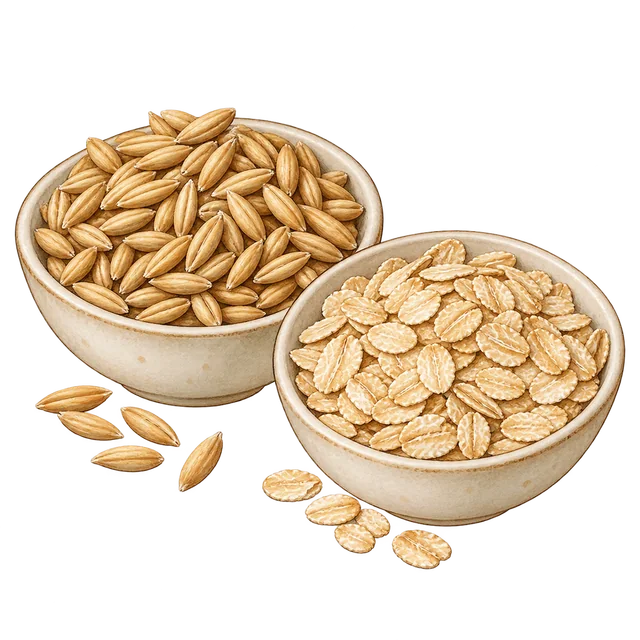
第三个误区:燕麦能减肥,所以随便吃。燕麦确实扛饿,但热量是实打实的:干燕麦每 100 g 约 379 kcal。扛饿能帮你控制总热量,但不等于可以不限量。
所以燕麦是好食物,前提是选配料表只有燕麦的产品,避开加糖的版本。
参考文献 · 12
U.S. Department of Agriculture, Agricultural Research Service. (2019). FoodData Central: Oats (raw; cooked oatmeal). A leading dietary source of beta-glucan soluble fiber. fdc.nal.usda.gov
U.S. Food and Drug Administration. (1997, with later updates). Health claim: soluble fiber from certain foods (oat beta-glucan) and risk of coronary heart disease, 21 CFR 101.81. Authorizes a CHD-risk-reduction claim for at least 3 g/day oat beta-glucan via LDL lowering. www.ecfr.gov/current/title-21/section-101.81
Tiwari, U., & Cummins, E. (2011). Meta-analysis of the effect of beta-glucan intake on blood cholesterol and glucose levels. Nutrition, 27(10), 1008-1016. At least 3 g/day beta-glucan lowers LDL cholesterol dose-dependently. 10.1016/j.nut.2010.11.006
Liatis, S., Tsapogas, P., Chala, E., et al. (2009). The consumption of bread enriched with betaglucan reduces LDL-cholesterol and improves insulin resistance in patients with type 2 diabetes. Diabetes & Metabolism, 35(2), 115-120. 10.1016/j.diabet.2008.09.004
National Institutes of Health, Office of Dietary Supplements. (2021). Manganese — Fact Sheet for Health Professionals. Breast milk 3–10 mcg/L; cow's-milk formula 30–100 mcg/L; soy-based formula 200–300 mcg/L (higher than milk-based, not a 50–75× ratio). Fact sheet (updated March 29, 2021; Wayback snapshot 15 September 2026): humans absorb only about 1% to 5% of dietary manganese; more than 90% of absorbed manganese is excreted via bile into the faeces; multivitamin/mineral supplements that contain manganese typically provide 1.0 to 4.5 mg, and manganese-only or few-nutrient supplements mostly contain 5 to 20 mg; people with chronic liver disease eliminate manganese poorly (fact sheet). ods.od.nih.gov/factsheets/Manganese-HealthProfessional
National Institutes of Health, Office of Dietary Supplements. (2024). Iron — Fact Sheet for Health Professionals. Fact sheet (updated September 4, 2025; Wayback snapshot 21 September 2026): RDAs 8 mg/day for men and for women 51+, 18 mg women 19-50, 27 mg pregnancy; UL 45 mg/day from age 14; bioavailability about 14%-18% from mixed diets with meat, seafood and vitamin C and 5%-12% from vegetarian diets; serum ferritin below 30 mcg/L suggests iron deficiency and below 10 mcg/L IDA, but inflammation can raise ferritin; supplemental iron of 45 mg/day or more may cause nausea and constipation; people with hereditary hemochromatosis are at risk of iron overload (fact sheet). Heme vs nonheme: heme iron (lean meat and seafood are the richest sources) has higher bioavailability than nonheme iron, and other dietary components affect it less; calcium might reduce the bioavailability of both forms; heme iron is about 10%-15% of total iron intake in western populations. The sheet gives no separate heme and nonheme absorption percentages (fact sheet, Wayback 2026 snapshot). ods.od.nih.gov/factsheets/Iron-HealthProfessional
Sandberg, A.-S. (2002). Bioavailability of minerals in legumes. British Journal of Nutrition, 88(S3), S281-S285. Phytate binds iron, zinc, and calcium; soaking, cooking, and fermentation reduce phytate and improve mineral absorption. 10.1079/BJN/2002718
EFSA Panel on Dietetic Products, Nutrition and Allergies (NDA). (2015). Scientific opinion on the safety of oats in people with celiac disease. EFSA Journal, 13(11), 4317. Most people with celiac disease tolerate uncontaminated oats; cross-contamination is the main concern. 10.2903/j.efsa.2015.4317
Gilissen, L. J. W. J., van der Meer, I. M., & Smulders, M. J. M. (2014). Reducing the incidence of allergy and intolerance to cereals. Journal of Cereal Science, 59(3), 337-353. Reviews avenin-gliadin cross-reactivity and the minority of celiac patients reacting to pure oats.