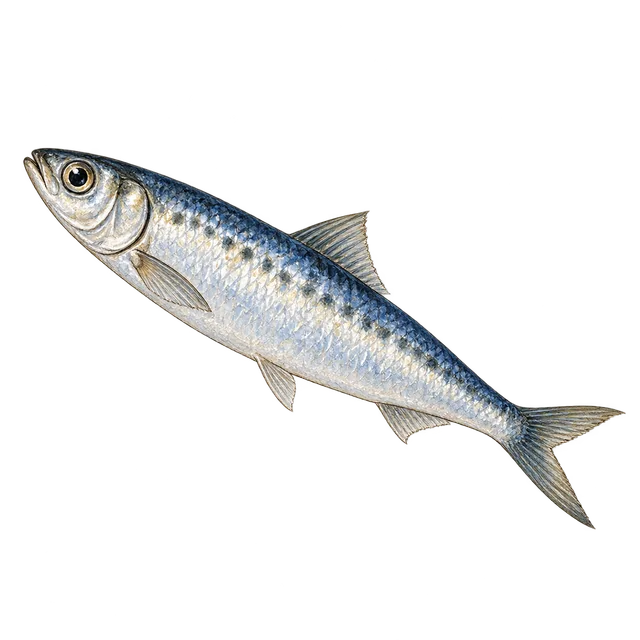
番茄:番茄汁罐头沙丁鱼本身就是个好组合,蔬菜补上纤维、维生素 C 和多酚。全谷主食(糙米、全麦面包):补上碳水和纤维,做成沙丁鱼三明治或拌饭。骨头:罐头的软骨头是钙的主要来源,嚼碎吃掉,别挑出来。一点柠檬:既去腥,它的维生素 C 也帮同一餐里来自植物的铁更好吸收。 浸泡介质也算搭配的一部分:番茄汁版顺带补点蔬菜,盐水版沥干后最清爽,橄榄油版风味好但热量高。
份量:健康成年人按 FDA 和 EPA(美国的两个联邦机构)的最佳选择档,每周 2-3 份低汞鱼是合理的。孕期、哺乳期、备孕和幼儿:沙丁鱼是推荐的低汞鱼,但仍按每周份量上限走。痛风或高尿酸的人控制频率,急性发作期避开。本页不替代医生的建议,有具体疾病请咨询专业人士。
实操 · 浸泡介质、吃法和可持续性
浸泡介质怎么选:橄榄油版风味好,但热量高;盐水版热量低,沥干后更清爽;番茄汁版顺带补点蔬菜。
怎么吃:罐头沙丁鱼可以直接铺在全麦面包上,拌进沙拉或米饭,用洋葱和柠檬调味。鲜鱼适合烤、煎或炭烤。
可持续性是加分项:沙丁鱼营养级低、繁殖快,通常比大型掠食鱼更环保;不过各地渔场的管理水平不一样。
参考文献 · 11
U.S. Department of Agriculture, Agricultural Research Service. (2019). FoodData Central: Fish, sardine, Atlantic, canned in oil, drained solids with bone. ~24-25 g protein and ~1.4-1.5 g EPA+DHA per 100 g; edible bones supply ~300-380 mg calcium/100 g. fdc.nal.usda.gov
Mozaffarian, D., & Wu, J. H. Y. (2011). Omega-3 fatty acids and cardiovascular disease: effects on risk factors, molecular pathways, and clinical events. Journal of the American College of Cardiology, 58(20), 2047–2067. 10.1016/j.jacc.2011.06.063
National Institutes of Health, Office of Dietary Supplements. (2024). Vitamin D — Fact Sheet for Health Professionals. Fact sheet (updated June 27, 2025; Wayback snapshot 20 September 2026): 25(OH)D below 30 nmol/L (12 ng/mL) is associated with deficiency, 30 to below 50 nmol/L is generally considered inadequate, 50 nmol/L (20 ng/mL) or more is sufficient for most people, and above 125 nmol/L (50 ng/mL) can be associated with adverse effects; RDA 600 IU (15 mcg) to age 70 and 800 IU (20 mcg) above 70; adult UL 4,000 IU (100 mcg); older people and people with darker skin (more melanin) make less vitamin D from sunlight (fact sheet). ods.od.nih.gov/factsheets/VitaminD-HealthProfessional
National Institutes of Health, Office of Dietary Supplements. (2024). Vitamin B12 — Fact Sheet for Health Professionals. Fact sheet (updated July 2, 2025; Wayback snapshot 20 September 2026): multivitamin/mineral supplements typically contain 5 to 25 mcg B12, B-complex products 50 to 500 mcg, B12-only supplements typically 500 to 1,000 mcg; absorption is only about 2% at 500 mcg and 1.3% at 1,000 mcg; a 2018 Cochrane review of 3 RCTs (153 participants) compared very high oral doses (1,000-2,000 mcg) with intramuscular B12; high oral doses (e.g. 1,000 mcg/day) might be equally effective in Crohn's disease and appear as effective as hydroxocobalamin injections after Roux-en-Y bypass. These are product contents and trial doses; the sheet gives no recommended daily supplement range (fact sheet). ods.od.nih.gov/factsheets/VitaminB12-HealthProfessional
National Institutes of Health, Office of Dietary Supplements. (2021). Selenium — Fact Sheet for Health Professionals. Table 2: Brazil nuts, 1 ounce (6-8 nuts), 544 mcg selenium (989% DV); the text says Brazil nuts contain 68-91 mcg per nut and could cause selenium toxicity if consumed regularly, and that values from other analyses vary widely. The version read carries 'Updated: April 15, 2024' (Wayback Machine snapshot of 31 December 2024), newer than the 2021 date above (fact sheet, read 2026-09-24). The September 4, 2025 update (Wayback snapshot 19 September 2026) adds: the body absorbs up to about 90% of selenium from selenomethionine, selenium-enriched yeast, selenite and selenate; selenium-only supplements typically contain 100 to 400 mcg; Keshan disease, an endemic cardiomyopathy first identified in 1935 in low-selenium parts of China, fell dramatically after selenium intervention trials in the 1970s-1990s; in 2017 the American Thyroid Association issued a weak recommendation against selenium supplements for TPOAb-positive pregnant women (fact sheet). ods.od.nih.gov/factsheets/Selenium-HealthProfessional
U.S. Food and Drug Administration & U.S. Environmental Protection Agency. (2022). Advice about eating fish: For those who might become or are pregnant or breastfeeding and children ages 1-11. Salmon, sardines, shrimp, and light canned tuna are 'Best Choices' (lower mercury); 2-3 servings/week recommended for adults, including those pregnant or breastfeeding (1 serving = 4 oz); children 1-11: 2 servings/week of Best Choices, with serving size by age (1 oz at 1-3, 2 oz at 4-7, 3 oz at 8-10, 4 oz at 11). www.fda.gov/food/consumers/advice-about-eating-fish
EFSA Panel on Contaminants in the Food Chain (CONTAM). (2012). Scientific opinion on the risk for public health related to the presence of mercury and methylmercury in food. EFSA Journal, 10(12), 2985. Methylmercury biomagnifies up the marine food chain and affects the developing nervous system. 10.2903/j.efsa.2012.2985
Ralston, N. V. C., & Raymond, L. J. (2010). Dietary selenium's protective effects against methylmercury toxicity. Toxicology, 278(1), 112-123. Selenium binds methylmercury and may partly offset its toxicity — mechanistic, not a license to ignore mercury. 10.1016/j.tox.2010.06.004
Zhang, Y., Chen, C., Choi, H., Chaisson, C., Hunter, D., Niu, J., & Neogi, T. (2012). Purine-rich foods intake and recurrent gout attacks. Annals of the Rheumatic Diseases, 71(9), 1448-1453. Acute purine-rich intake (including oily fish) was associated with a higher risk of recurrent gout flares. 10.1136/annrheumdis-2011-201215
Choi, H. K., Atkinson, K., Karlson, E. W., Willett, W., & Curhan, G. (2004). Purine-rich foods, dairy and protein intake, and the risk of gout in men. New England Journal of Medicine, 350(11), 1093-1103. Health Professionals Follow-up Study: 47,150 men with no gout at baseline, 12 years, 730 confirmed incident cases. Highest vs lowest fifth: meat RR 1.41 (1.07-1.86), seafood RR 1.51 (1.17-1.95), dairy RR 0.56 (0.42-0.74). Purine-rich vegetables and total protein intake were NOT associated with a higher risk (abstract, PMID 15014182). 10.1056/NEJMoa035700