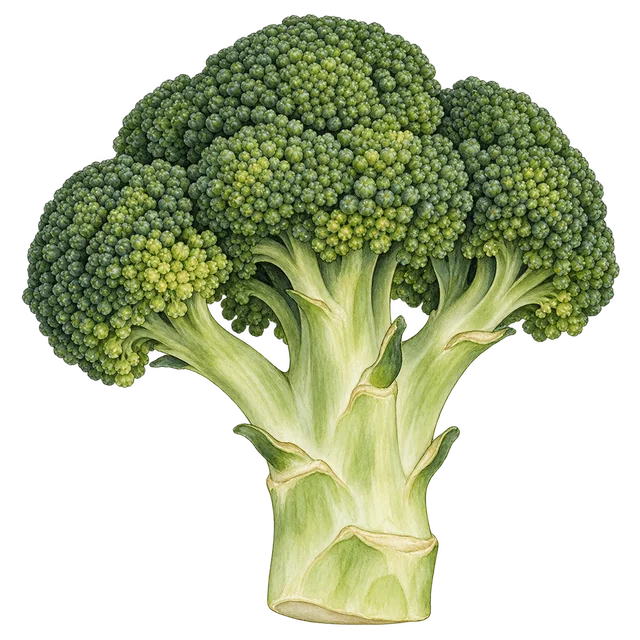
U.S. Department of Agriculture, Agricultural Research Service. (2019). FoodData Central: Broccoli, raw and cooked. ~34 kcal/100 g raw; high vitamin C and vitamin K1, folate, fiber. fdc.nal.usda.gov
National Institutes of Health, Office of Dietary Supplements. (2021). Vitamin K — Fact Sheet for Health Professionals. Fact sheet (updated March 29, 2021; Wayback snapshot 19 September 2026): free phylloquinone is about 80% absorbed, but absorption from food is much lower - the body absorbs only 4% to 17% as much from spinach as from a tablet; Table 2: natto, 3 ounces, 850 mcg (as MK-7); egg, hard boiled, 1 large, 4 mcg (as MK-4) (fact sheet). ods.od.nih.gov/factsheets/VitaminK-HealthProfessional
Fahey, J. W., Zalcmann, A. T., & Talalay, P. (2001). The chemical diversity and distribution of glucosinolates and isothiocyanates among plants. Phytochemistry, 56(1), 5-51. Foundational chemistry of glucoraphanin conversion to sulforaphane by the enzyme myrosinase; myrosinase is heat-sensitive. 10.1016/S0031-9422(00)00316-2
Minich, D. M., & Bland, J. S. (2007). A review of the clinical efficacy and safety of cruciferous vegetable phytochemicals. Nutrition Reviews, 65(6), 259-267. Reviews I3C/DIM/sulforaphane mechanisms — CYP1A1 induction, 2-hydroxylation shift — and notes most human evidence is biomarker-only, not disease outcomes. Abstract: significantly more clinical trials exist for I3C than for DIM; I3C shifts hormone markers favourably and limited evidence suggests DIM may do the same; more human research is needed on whether DIM poses a safety risk; current data do not suggest DIM gives greater clinical benefit than I3C. The listed affiliation is Metagenics, Inc., Department of Research and Development (abstract and affiliation, PMID 17605302). 10.1111/j.1753-4887.2007.tb00303.x