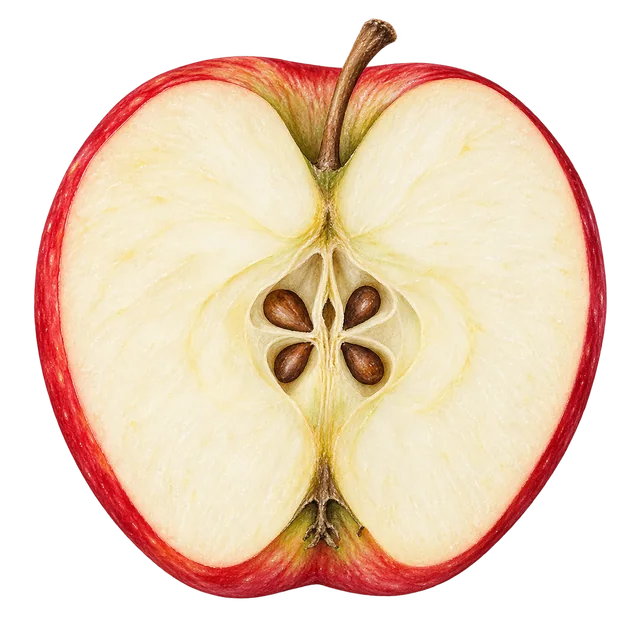
U.S. Department of Agriculture, Agricultural Research Service. (2019). FoodData Central: Apples, raw, with skin. ~52 kcal/100 g; soluble fiber (pectin) and skin polyphenols; modest vitamin C. fdc.nal.usda.gov
Boyer, J., & Liu, R. H. (2004). Apple phytochemicals and their health effects. Nutrition Journal, 3, 5. Apple polyphenols concentrate in the skin; pectin is a soluble fiber. 10.1186/1475-2891-3-5
Muraki, I., Imamura, F., Manson, J. E., Hu, F. B., Willett, W. C., van Dam, R. M., & Sun, Q. (2013). Fruit consumption and risk of type 2 diabetes: results from three prospective longitudinal cohort studies. BMJ, 347, f5001. Across 187,382 participants in three cohorts, higher whole-fruit intake was associated with lower type 2 diabetes risk while higher fruit-juice intake was associated with higher risk; substituting whole fruit for juice was associated with lower risk. Abstract figures (NHS, NHS II, HPFS; 12,198 cases): per 3 servings a week, whole fruit HR 0.98; blueberries 0.74, grapes and raisins 0.88, apples and pears 0.93, bananas 0.95, cantaloupe 1.10; fruit juice 1.08 (1.05-1.11). Observational (abstract, PMID 23990623). 10.1136/bmj.f5001