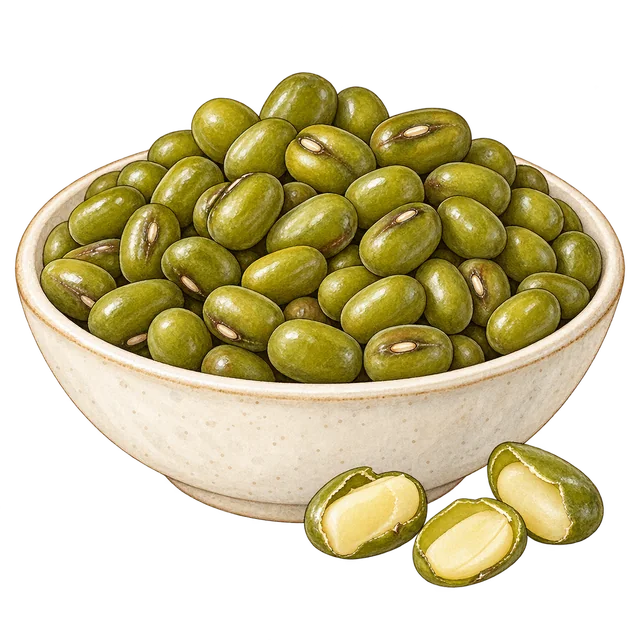
第一关是在肠腔里活着走完全程。谁先抓住它,它就进不去。植酸(phytate)、浓茶和咖啡里的多酚、同一顿里大量的钙,都会在肠腔里跟铁结成不溶的一团,直接随粪便离开第二关是在小肠上皮细胞的门口被掰一下。细胞表面那层刷状缘上有还原酶,把三价铁变成二价铁;而那道往细胞里搬运的门只认二价铁 维生素 C 的位置很巧,因为它同时管着这两关:它本身是还原剂,帮着把三价掰成二价;它还会跟铁结合成一种在肠腔里保持溶解的形式,让植酸抢不走。
落到实处:一碗绿豆汤配点富含维生素 C 的东西(青椒、西红柿、柑橘),比空口喝一碗更有意义;而饭前饭后那杯浓茶,等于在这两关之外又加了一道锁(铁这条线完整讲在铁那篇)。
U.S. Department of Agriculture, Agricultural Research Service. (2019). FoodData Central: Mung beans (mature seeds and sprouts). Plant protein and fiber, non-heme iron; sprouting raises vitamin C and lowers phytate. fdc.nal.usda.gov
National Institutes of Health, Office of Dietary Supplements. (2024). Iron — Fact Sheet for Health Professionals. Fact sheet (updated September 4, 2025; Wayback snapshot 21 September 2026): RDAs 8 mg/day for men and for women 51+, 18 mg women 19-50, 27 mg pregnancy; UL 45 mg/day from age 14; bioavailability about 14%-18% from mixed diets with meat, seafood and vitamin C and 5%-12% from vegetarian diets; serum ferritin below 30 mcg/L suggests iron deficiency and below 10 mcg/L IDA, but inflammation can raise ferritin; supplemental iron of 45 mg/day or more may cause nausea and constipation; people with hereditary hemochromatosis are at risk of iron overload (fact sheet). Heme vs nonheme: heme iron (lean meat and seafood are the richest sources) has higher bioavailability than nonheme iron, and other dietary components affect it less; calcium might reduce the bioavailability of both forms; heme iron is about 10%-15% of total iron intake in western populations. The sheet gives no separate heme and nonheme absorption percentages (fact sheet, Wayback 2026 snapshot). ods.od.nih.gov/factsheets/Iron-HealthProfessional
Klein, A. V., & Kiat, H. (2015). Detox diets for toxin elimination and weight management: a critical review of the evidence. Journal of Human Nutrition and Dietetics, 28(6), 675-686. Very little clinical evidence supports detox diets: a handful of clinical studies reported enhanced liver detoxification or removal of persistent organic pollutants, but they were hampered by flawed methods and small samples; evidence for particular foods (coriander, nori, olestra) is preliminary and mostly from animals; and, verbatim, 'no randomised controlled trials have been conducted to assess the effectiveness of commercial detox diets in humans' (abstract, PMID 25522674). 10.1111/jhn.12286