In one pass Grapefruit and some pomelos contain molecules called furanocoumarins that knock out a drug-processing enzyme in the wall of the small intestine, so some medicines reach the blood in much larger amounts.
Educational content, not medical advice — consult a clinician.
Grapefruit and some pomelos contain molecules called furanocoumarins that knock out a drug-processing enzyme in the wall of the small intestine, so some medicines reach the blood in much larger amounts. If you take regular medicines, check with your doctor or pharmacist before eating grapefruit or pomelo. How the enzyme gets switched off, and why eating the fruit a few hours apart from the pill is not a safe fix, is covered in the chapter on how grapefruit changes the way drugs work.
Drugs aside, these are refreshing, juicy fruits with plenty of vitamin C and fiber. The pomelo is the largest member of the citrus family; the grapefruit is a cross between pomelo and sweet orange, smaller, and a little bitter and tart. Both are close relatives of the sweet orange, but sweet oranges do not contain these molecules and do not affect drugs this way.
A CLOSER LOOK
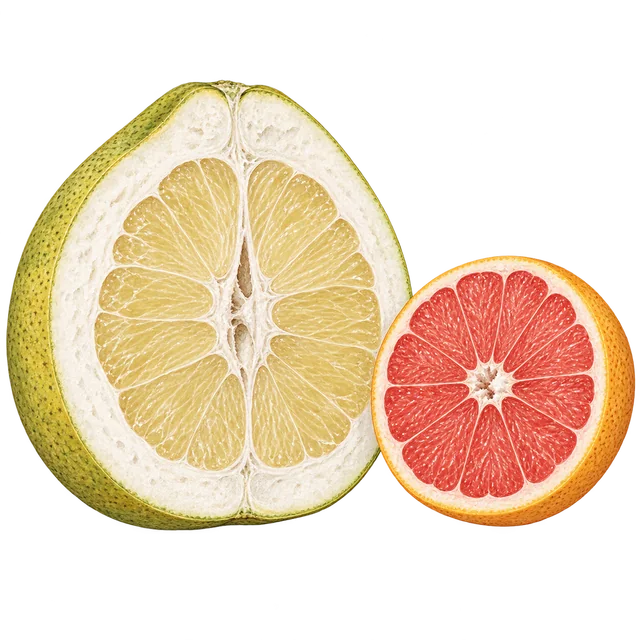
Pomelo and grapefruit: identify the fruit
Color, size and variety vary. This compares typical forms, not every citrus variety.
1Pomelo
The pomelo on the left is larger, with a thick pale pith around its lighter flesh.
2Grapefruit
The grapefruit on the right illustrates a pink-fleshed form with thinner pith.
Illustration for understanding; not to scale. Saved figures include explanations and sources.
Background · Where pomelo sits in the citrus family
Pomelo, sweet orange, grapefruit, lime and bitter orange all belong to the citrus family. Grapefruit came from a cross between pomelo and sweet orange; it sits between the two in size and tastes bitter and tart.
For nutrition, the family tree matters less than you might think. Pomelo and grapefruit, like sweet orange, are good sources of vitamin C and fiber, low in calories and high in water. What really sets them apart is one class of molecules, the furanocoumarins: grapefruit and some pomelos have them, and ordinary sweet oranges do not.
That makes grapefruit one of the few cases where a food clearly changes how a drug works and the mechanism is well understood. It also shows something more general: drugs and the plant molecules in food travel the same metabolic line in the body. The body only sees molecules; it cannot tell which one is a pill and which one is a fruit. That is why people on medication especially need to know about it.
Chapter 2
Nutrition · vitamin C, fiber, carotenoids
Setting the drug question aside, pomelo and grapefruit are nutritious fruits. They are rich in vitamin C, give you fiber if you eat the segments with their membranes, and red-flesh grapefruit adds lycopene and beta-carotene. Low in calories and high in water, they suit most people in normal amounts.
The only "but" is the drug interaction, and it matters only for people taking certain medicines.
Mechanism · What vitamin C, fiber and red pigment do
Vitamin C (Vitamin C): the citrus signature, and both pomelo and grapefruit carry a good amount. It helps build collagen, takes part in antioxidant defense, and helps you absorb more iron from plant foods eaten in the same mealFiber: eating whole segments, membranes included, gives more fiber than drinking the juice, and blood sugar rises more gently; juicing strains most of the fiber outCarotenoids: the red of red-flesh grapefruit comes from lycopene and beta-carotene, pigments of the carotenoid family and extra antioxidants So the best way to eat these fruits is the same as with oranges: peel them and eat the segments whole, rather than drinking them as juice.
Chapter 3
How grapefruit changes how drugs work
Many oral drugs are partly broken down in the wall of the small intestine by an enzyme called before they reach the blood. What gets into the bloodstream is whatever is left.
The furanocoumarins in grapefruit disable the CYP3A4 in the intestinal wall, and they do it irreversibly: the body has to make new enzyme before this step works again. So the share of the drug that should have been broken down enters the blood intact, blood levels rise, and so does the risk of side effects and toxicity. Because recovery has to wait for new enzyme, taking the fruit a few hours apart from the pill is not reliable. Ordinary sweet oranges do not contain these molecules and do not cause this problem.
Mechanism · Why spacing it by a few hours fails
Think of as a security checkpoint. It sits in both the wall of the small intestine and the liver, and a swallowed pill passes the gut-wall checkpoint first, where many drugs lose part of their dose. The dose your doctor prescribes is set for what is left after the checkpoint.
Grapefruit's furanocoumarins do not just block the checkpoint for a while; they wreck the enzyme in the gut wall outright. So what matters is not how far apart you take the two, but how long the body needs to make new enzyme. Until then, every dose goes into the blood with no checkpoint at all. That is also why fresh juice, frozen concentrate and the whole fruit all have the effect: what acts is the class of molecules, not the form you eat it in.
Which citrus fruits have them: grapefruit, some pomelos, Seville bitter oranges and limes contain furanocoumarins. Ordinary sweet oranges (navel and Valencia) do not and do not cause this interaction. So this is a grapefruit and pomelo problem, not an all citrus problem (Bailey 2013).
Chapter 4
Who on medication should be careful
Quite a few drugs interact noticeably with grapefruit and pomelo. Common ones include some statins for lowering cholesterol (with certain statins, blood levels rise sharply and so does the risk of muscle injury), some calcium-channel-blocker blood-pressure drugs, certain immunosuppressants, and some antiarrhythmic and sedative drugs. One whole grapefruit, or about 200 mL of grapefruit juice, is enough to have a clinically meaningful effect on a sensitive drug.
So there is no need to memorize drug names. If you take any medicine long term, treat "can I eat grapefruit or pomelo?" as a question to raise with your doctor or pharmacist, or check the food warnings in the medicine's leaflet. If you do not take these drugs, enjoy the fruit without worry.
Red flag: if you take medication (especially statins, blood-pressure drugs, immunosuppressants or antiarrhythmics) and want to eat grapefruit or pomelo, ask your doctor or pharmacist first. This is general education, not professional medication advice, and it does not suggest adjusting any drug on your own.
Clinical · Which drugs are hit hardest
The drugs hit hardest are oral drugs that normally lose a large share of their dose to in the gut wall. Only a small fraction of them usually reaches the blood, and the dose is set for exactly that fraction. Shut the gut-wall checkpoint and the amount reaching the blood can climb sharply. Drugs that already get into the blood easily, or that are not broken down by CYP3A4, are affected much less.
This also explains why, within one class of drugs, some are affected and some are not. Among statins, simvastatin is clearly affected, while a few others do not use this route at all. Which side your own drug falls on is something a pharmacist can look up in seconds, and that is more reliable than memorizing a list.
The statin point is worth remembering on its own: blood levels that climb too high can damage muscle. If you take a statin and have eaten grapefruit or pomelo, and you notice muscle aches or weakness you cannot explain, tell your doctor.
References · 3
U.S. Department of Agriculture, Agricultural Research Service. (2019). FoodData Central: Grapefruit and pomelo (raw). Vitamin C and fiber; red grapefruit contains lycopene and beta-carotene. fdc.nal.usda.gov
Bailey, D. G., Dresser, G., & Arnold, J. M. O. (2013). Grapefruit-medication interactions: forbidden fruit or avoidable consequences? CMAJ, 185(4), 309-316. 10.1503/cmaj.120951